Recombinant Human Ceroid-lipofuscinosis neuronal protein 6 (CLN6), partial
-
中文名稱:Recombinant Human Ceroid-lipofuscinosis neuronal protein 6(CLN6),partial
-
貨號(hào):CSB-YP882125HU1
-
規(guī)格:
-
來(lái)源:Yeast
-
其他:
-
中文名稱:Recombinant Human Ceroid-lipofuscinosis neuronal protein 6(CLN6),partial
-
貨號(hào):CSB-EP882125HU1
-
規(guī)格:
-
來(lái)源:E.coli
-
其他:
-
中文名稱:Recombinant Human Ceroid-lipofuscinosis neuronal protein 6(CLN6),partial
-
貨號(hào):CSB-EP882125HU1-B
-
規(guī)格:
-
來(lái)源:E.coli
-
共軛:Avi-tag Biotinylated
E. coli biotin ligase (BirA) is highly specific in covalently attaching biotin to the 15 amino acid AviTag peptide. This recombinant protein was biotinylated in vivo by AviTag-BirA technology, which method is BriA catalyzes amide linkage between the biotin and the specific lysine of the AviTag.
-
其他:
-
中文名稱:Recombinant Human Ceroid-lipofuscinosis neuronal protein 6(CLN6),partial
-
貨號(hào):CSB-BP882125HU1
-
規(guī)格:
-
來(lái)源:Baculovirus
-
其他:
-
中文名稱:Recombinant Human Ceroid-lipofuscinosis neuronal protein 6(CLN6),partial
-
貨號(hào):CSB-MP882125HU1
-
規(guī)格:
-
來(lái)源:Mammalian cell
-
其他:
產(chǎn)品詳情
-
純度:>85% (SDS-PAGE)
-
基因名:CLN6
-
Uniprot No.:
-
別名:CLN6; Ceroid-lipofuscinosis neuronal protein 6; Protein CLN6
-
種屬:Homo sapiens (Human)
-
蛋白長(zhǎng)度:Partial
-
蛋白標(biāo)簽:Tag?type?will?be?determined?during?the?manufacturing?process.
The tag type will be determined during production process. If you have specified tag type, please tell us and we will develop the specified tag preferentially. -
產(chǎn)品提供形式:Lyophilized powder
Note: We will preferentially ship the format that we have in stock, however, if you have any special requirement for the format, please remark your requirement when placing the order, we will prepare according to your demand. -
復(fù)溶:We recommend that this vial be briefly centrifuged prior to opening to bring the contents to the bottom. Please reconstitute protein in deionized sterile water to a concentration of 0.1-1.0 mg/mL.We recommend to add 5-50% of glycerol (final concentration) and aliquot for long-term storage at -20℃/-80℃. Our default final concentration of glycerol is 50%. Customers could use it as reference.
-
儲(chǔ)存條件:Store at -20°C/-80°C upon receipt, aliquoting is necessary for mutiple use. Avoid repeated freeze-thaw cycles.
-
保質(zhì)期:The shelf life is related to many factors, storage state, buffer ingredients, storage temperature and the stability of the protein itself.
Generally, the shelf life of liquid form is 6 months at -20°C/-80°C. The shelf life of lyophilized form is 12 months at -20°C/-80°C. -
貨期:Delivery time may differ from different purchasing way or location, please kindly consult your local distributors for specific delivery time.Note: All of our proteins are default shipped with normal blue ice packs, if you request to ship with dry ice, please communicate with us in advance and extra fees will be charged.
-
注意事項(xiàng):Repeated freezing and thawing is not recommended. Store working aliquots at 4°C for up to one week.
-
Datasheet :Please contact us to get it.
產(chǎn)品評(píng)價(jià)

相關(guān)產(chǎn)品
靶點(diǎn)詳情
-
基因功能參考文獻(xiàn):
- The CLN6 is not only a molecular entity of the anti-aggregate activity conferred by the ER manipulation using TMalphaBC, but also serves as a potential target of therapeutic interventions. PMID: 28476624
- describe the spectrum of clinical and neurophysiologic features associated with mutations of CLN6. PMID: 26115733
- study demonstrates the central role of the metal transporter, Zip7, in the aberrant biometal metabolism of CLN6 variants of Neuronal ceroid lipofuscinoses. PMID: 24581221
- The study describes the first report in the North of Morocco of the CLN6 p.I154del mutation in 3 patients belonging to a large consanguineous family. PMID: 23180398
- our results add CLN6 to the genetic mutations causing teenage-onset progressive myoclonus epilepsy PMID: 22883287
- CLN6 and CLN3 mutations trigger distinct processes that converge on a shared pathway, which is responsible for proper subunit c protein turnover and neuronal cell survival. PMID: 21359198
- Sequencing of CLN6 will provide a simple diagnostic strategy in this disorder, in which definitive identification usually requires invasive biopsy. PMID: 21549341
- Expression studies of three mutations found in CLN6 patients predicted to affect transmembrane domain 3, cytoplasmic loop 2 or result in a truncated membrane protein respectively, is reported. PMID: 20020536
- gene mutated in variant late-infantile neuronal ceroid lipofuscinosis (CLN6) and in nclf mutant mice encodes a novel predicted transmembrane protein PMID: 11727201
- novel approximately 36-kD CLN6-gene product augments an intriguing set of unrelated membrane-spanning proteins, whose deficiency causes neuronal ceroid lipofuscinosis in mouse and man PMID: 11791207
- Eight novel mutations identified in CLN6 in 26 families with late infantile neuronal ceroid lipofuscinosis. PMID: 12815591
- ER-resident CLN6 protein lead to lysosomal dysfunctions, which may result in lysosomal accumulation of storage material PMID: 15010453
- CLN6 is an ER resident protein, the activity of which, despite this location, must contribute to lysosomal function. PMID: 15265688
- These data indicate that CLN6 mutations, in addition to those of CLN8, should be considered a diagnostic alternative in Turkish variant late-infantile neuronal ceroid lipofuscinosis patients. PMID: 15996215
- Cholesterol accumulation in lysosomes suggests a homeostasis block as a result of CLN6p deficiency, while dysfunctional endosomal/lysosomal vesicles may act as one of the triggers for apoptosis and cell death. PMID: 16857350
- CLN6 maintains its endoplasmic reticulum localization by expressing retention signals present in both the N-terminal cytosolic domain and in the carboxy-proximal transmembrane domains 6 and 7. PMID: 17453415
- knockdown of SEL1L [sel-1 suppressor of lin-12-like (Caenorhabditis elegans)], a member of an E3 ubiquitin ligase complex involved in ER protein extraction, rescued significant amounts of Cln6(G123D) and Cln6(M241T) polypeptides. PMID: 18811591
- 11 mutations in patients with neuronal ceroid lipofuscinoses, eight of which are novel, were detected in CLN6, all predicting a direct impairing of the putative gene function. PMID: 19135028
- three families with CLN6-associated variant late infantile neuronal ceroid lipofuscinosis from Saudi Arabia are described; one had a novel mutation in the CLN6 gene PMID: 19520283
顯示更多
收起更多
-
相關(guān)疾病:Ceroid lipofuscinosis, neuronal, 6 (CLN6); Ceroid lipofuscinosis, neuronal, 4A (CLN4A)
-
亞細(xì)胞定位:Endoplasmic reticulum membrane; Multi-pass membrane protein. Endoplasmic reticulum.
-
數(shù)據(jù)庫(kù)鏈接:
Most popular with customers
-
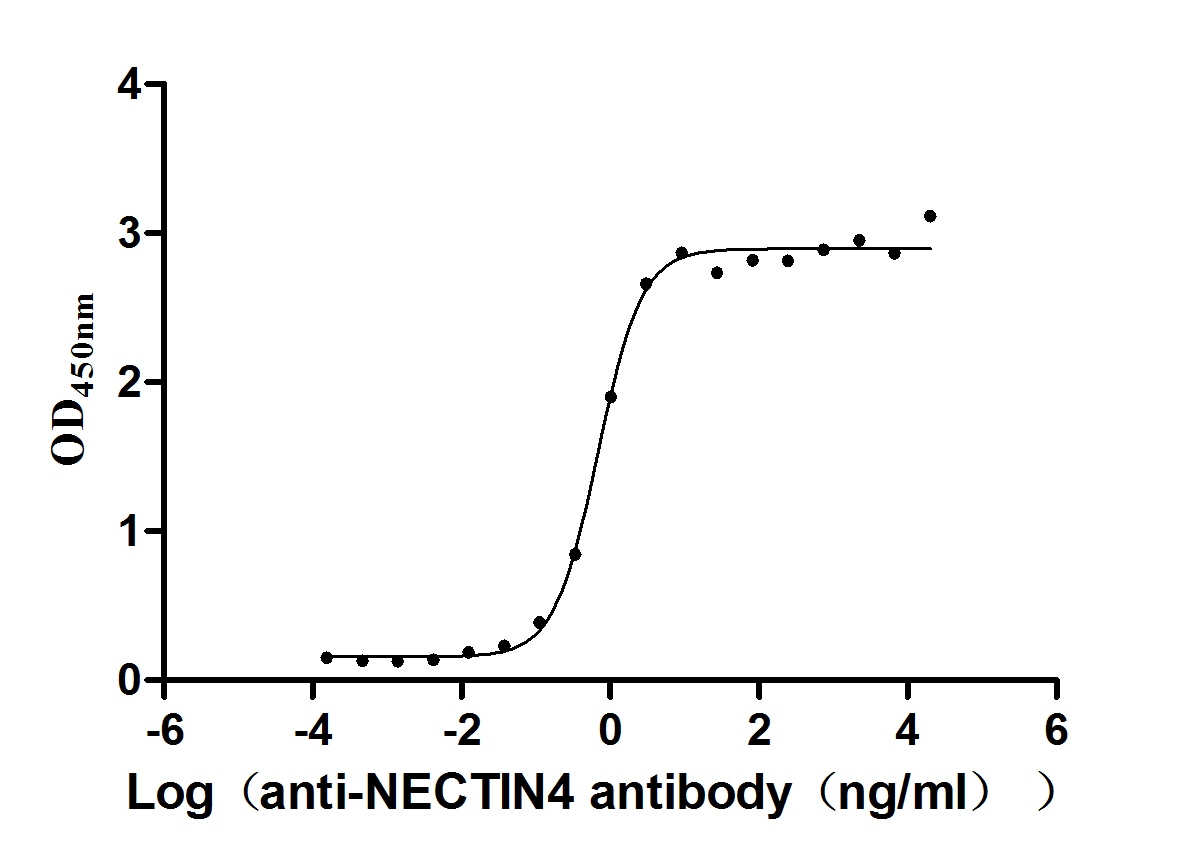
Recombinant Human Nectin-4 (NECTIN4), partial (Active)
Express system: Mammalian cell
Species: Homo sapiens (Human)
-
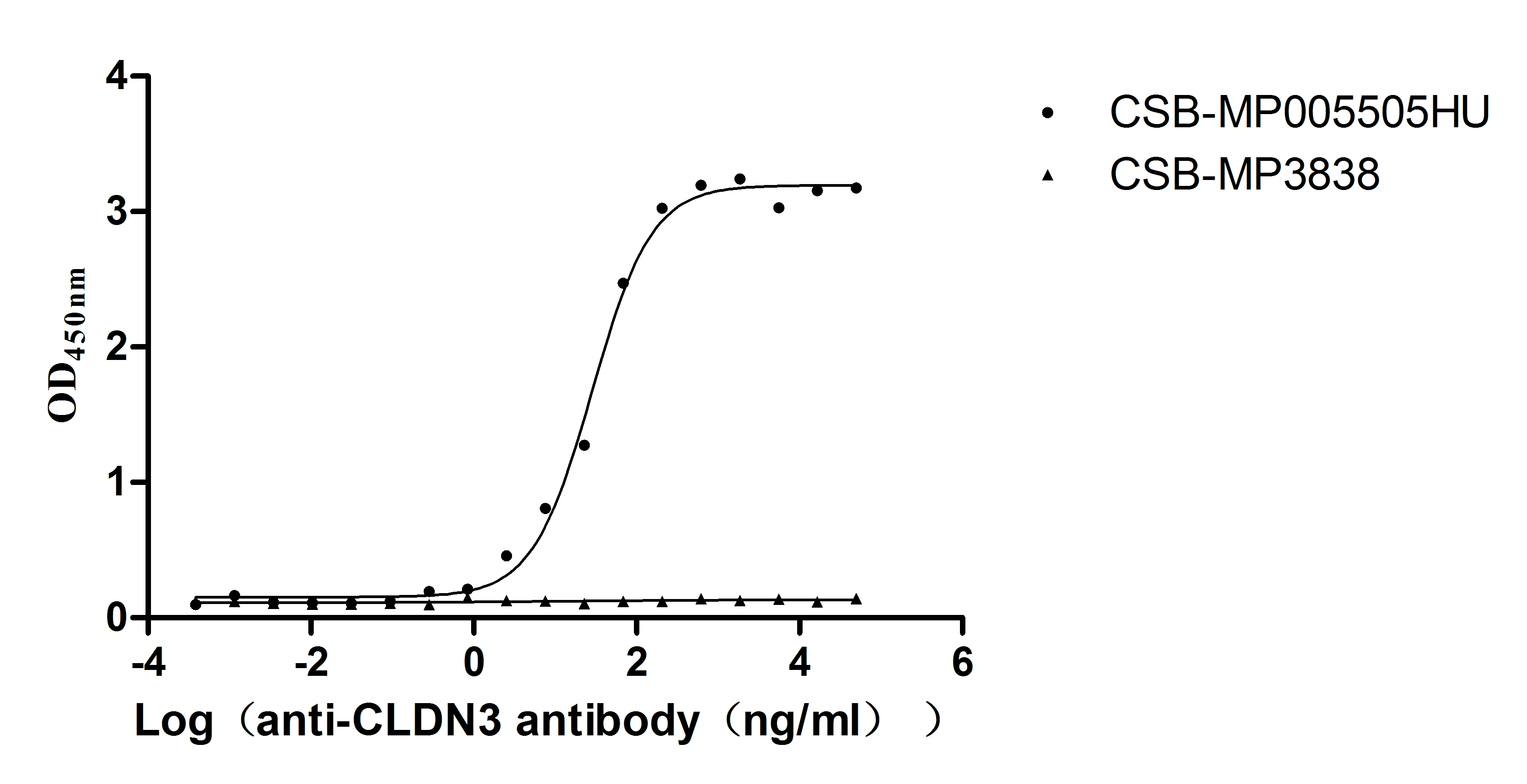
Recombinant Human Claudin-3 (CLDN3)-VLPs (Active)
Express system: Mammalian cell
Species: Homo sapiens (Human)
-
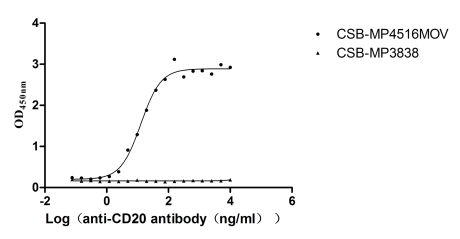
Recombinant Macaca fascicularis Membrane spanning 4-domains A1 (MS4A1)-VLPs (Active)
Express system: Mammalian cell
Species: Macaca fascicularis (Crab-eating macaque) (Cynomolgus monkey)
-
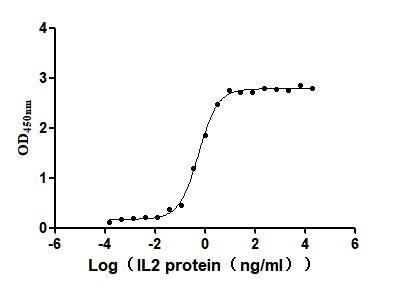
Recombinant Human Interleukin-2 (IL2) (Active)
Express system: Mammalian cell
Species: Homo sapiens (Human)
-
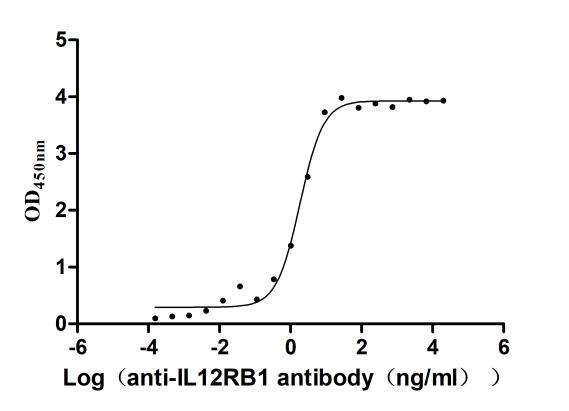
Recombinant Human Interleukin-12 receptor subunit beta-1(IL12RB1),partial (Active)
Express system: Mammalian cell
Species: Homo sapiens (Human)